About Us Our Work Employment News & Events
MITRE Remote Access for MITRE Staff and Partners Site Map
About Us

Follow Us:

Visit MITRE on Facebook
Visit MITRE on Twitter
Visit MITRE on Linkedin
Visit MITRE on YouTube
View MITRE's RSS Feeds
View MITRE's Mobile Apps
Home > About Us > Corporate Citizenship >

Mentor Helps Students Find Their Place in Space

July 2011

Mentor Helps Students Find Their Place in Space

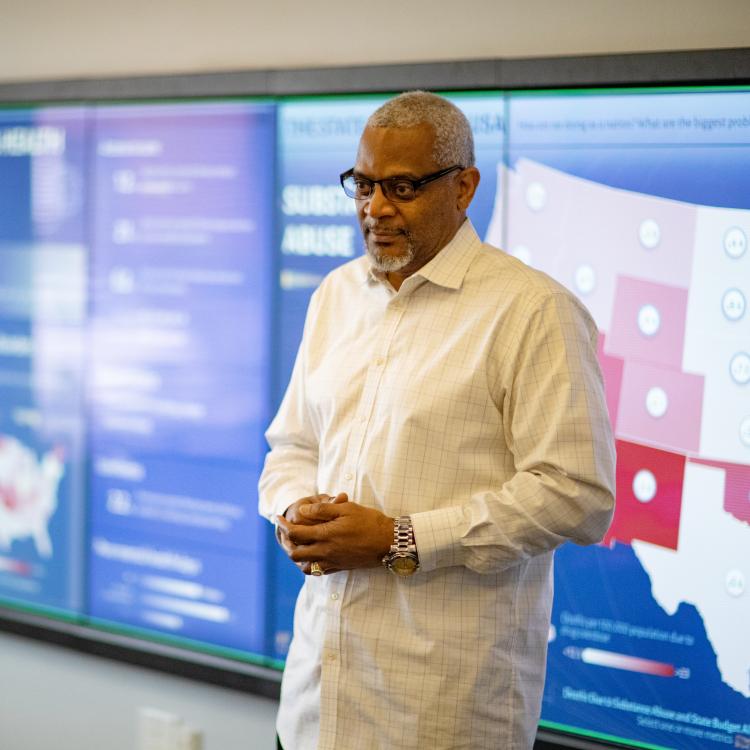
MITRE supported Jim Dieudonne (inset) in mentoring the UL Lafayette students through the CAPE 1 process as part of the company's educational outreach program.

In early 2012, for the second time in five years, students at the University of Louisiana Lafayette will have a satellite slightly larger than a Rubik's cube shot into space. Jim Dieudonne, a graduate of UL Lafayette and a principal multi-discipline systems engineer in MITRE's Center for Advanced Aviation System Development, helped the students with both projects.

A Russian Dneper rocket launched the first satellite, the Cajun Advanced Picosatellite Experiment (CAPE 1) into low earth orbit in April 2007. California Polytechnic State University and Stanford University's Space Systems Development Lab developed CubeSat (www.Cubesat.org), which creates launch opportunities for universities previously unable to access space for scientific experiments. The UL Lafayette team was one of 15 teams to have a picosatellite launched into space that year. The CAPE 2 project will launch in 2012 through a NASA program called Educational Launch of Nanosatellites, which began in 2008.

CAPE 1 gave students detailed real-world data so they could understand the physical conditions a low-earth orbiting satellite experiences. The project incorporated elements of electrical, mechanical, and aerospace engineering, as well as computer science and physics. Each picosatellite measures about 10 centimeters on a side.

A Mentor to Many

MITRE supported Dieudonne in mentoring the UL Lafayette students through the CAPE 1 process as part of the company's educational outreach program. For the last 10 years, he's been an adviser to the students in the Electrical Engineering and Computer Engineering Department. Dieudonne recently retired from MITRE, but occasionally works part time for the company.


The CAPE 2 Technology Missions

CAPE 2 will carry two technology missions. First, it will deploy a solar panel with peak-power tracking. Solar panels will open after launch and peak-power tracking will maximize their power output. The team believes this will be the first single-cube CubeSat with peak-power tracking for deployed solar panels. Successful in-orbit validation of this new technology will benefit future CubeSats.

Second, CAPE 2 will carry a software defined radio (SDR) payload. An SDR is a radio that does its internal signal processing entirely through software rather than hardware. It picks up an RF signal and samples and digitizes it; the software handles all the subsequent signal processing needed to extract the information. SDR technology can change a radio's functions as needed solely through software code. It holds particular promise in satellite communications by avoiding the need to carry different hardware payloads for different communications tasks.
(Source: University of Louisiana at Lafayette.)


At the same time, Dieudonne served on the Digital Avionics Technical Committee (DATC) of the American Institute of Aeronautics and Astronautics. The DATC turned out to be an important connection, thanks to two other DATC members who also advised the students: Fahmida Chowdhury, then a professor at UL Lafayette, and Lt. Col. Glen Logan (retired), a graduate of at UL Lafayette.

"When Professor Chowdhury taught, she worked with NASA Langley on projects with her students," says Dieudonne. "This introduced students to aerospace science and avionics."

As the UL Lafayette students prepared their CAPE 1 proposal, Dieudonne, Fahmida, and Glen reviewed it, giving the students encouragement and pointing them in the right directions. After the successful launch of CAPE 1, Dieudonne and Chowdhury encouraged the students to write a paper for the 2007 Digital Avionics Systems Conference in Dallas. Three students from the original CAPE 1 project—Jason LaBerteaux, Jason Moesta, and Blaise Bernard—wrote the paper and travelled to Dallas to present it.

"Their presentation was topnotch, and they won the award for the Best Student Paper," Dieudonne says. (See "Advanced Picosatellite Experiment" at IEEEXplore.)

Preparing to Launch CAPE 2

For the next CubeSat project, NASA will use launch vehicles already planned for 2011 and 2012 to carry the mini-satellites as auxiliary payloads. UL Lafayette prepared its CAPE 2 package to conduct research into advanced modulation and encoding techniques to improve communication performance. The team redesigned the on-board power and computer system to improve efficiency and provide robust performance. (See "The CAPE 2 Technology Missions.")

"NASA required us to go through a number of readiness reviews for our CAPE 2 proposal," says George Thomas, head of UL Lafayette's Department of Electrical and Computer Engineering. "For the merit review, we needed senior, experienced outside reviewers, and Jim was one of them. He went through our proposal, and with his experience in the field, he gave us many ideas for improving it. The proposal's success was, in some good measure, due to his input. Jim has been a great asset to the department, in general, and the CAPE program in particular."
Jim Dieudonne   Jim Dieudonne

The CAPE 1 picosatellite measured about 10-cm on a side and weighed 1-kg. It carried a 9600 baud data relay payload. It was launched in April 2007 and eventually burned up as it entered the Earth’s atmosphere.


CAPE 2 will launch in early 2012. It will use deployable solar panels and carry a software defined radio payload.

—by David A. Van Cleave

Page last updated: July 26, 2011   |   Top of page

Homeland Security Center Center for Enterprise Modernization Command, Control, Communications and Intelligence Center Center for Advanced Aviation System Development


Solutions That Make a Difference.®
Copyright © 1997-2013, The MITRE Corporation. All rights reserved.
MITRE is a registered trademark of The MITRE Corporation.
Material on this site may be copied and distributed with permission only.

IDG's Computerworld Names MITRE a "Best Place to Work in IT" for Eighth Straight Year The Boston Globe Ranks MITRE Number 6 Top Place to Work Fast Company Names MITRE One of the "World's 50 Most Innovative Companies"
 

Privacy Policy | Contact Us