
ACCEL (Advanced Command and Control Experimentation Lab)
A collaborative laboratory for distributed, all-domain command-and-control (C2) experimentation and analysis to collaboratively advance joint warfighting concepts.

About ACCEL
The ACCEL mission is to partner with the government, industry, and other stakeholders to seamlessly integrate and mature C2 constructs and technology concepts through design, experimentation, and testing against pacing national security mission challenges.
ACCEL leverages MITRE’s extensive experience and capabilities in operational analysis, mission engineering, experimentation, and modular open systems architectures to reduce development timelines and allow solution and concept providers to answer key questions early in the development phase.
The federated environment uses a library of shared platforms, applications, data, and C2 frameworks. Using live, virtual, and constructive formats, ACCEL evaluates technologies or C2 concepts against standardized metrics and benchmarks in operationally representative environments at speed and scale. ACCEL can quickly answer questions such as:
- What is the value of new long-range fires and sensors in a military conflict with a near peer adversary?
- How do distributed versus centralized C2 concepts improve joint force lethality and survivability?
- How can a new User Interface and multi-source fusion engine improve operator decision-making?
- How does an additional data source improve mission effectiveness?
- What is the mission impact of different approaches to data integration and latency?
Key Tenets

Modular Open Systems Architecture
ACCEL provides a modular open systems approach featuring application programming interfaces (APIs) that enable government and industry entities to seamlessly integrate their own concepts via APIs into the ACCEL environment. This facilitates rapid deployment and testing of users’ technologies.
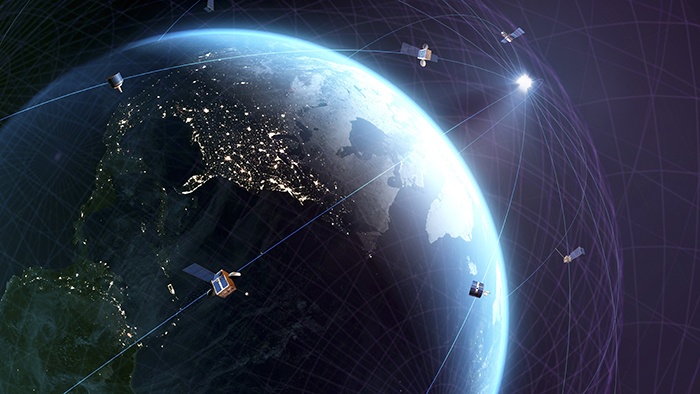
Models
ACCEL maintains a comprehensive catalog of Advanced Framework for Simulation, Integration, and Modeling (AFSIM) operational scenarios, informed by intelligence, doctrinal guidelines, and relevant operational plans.
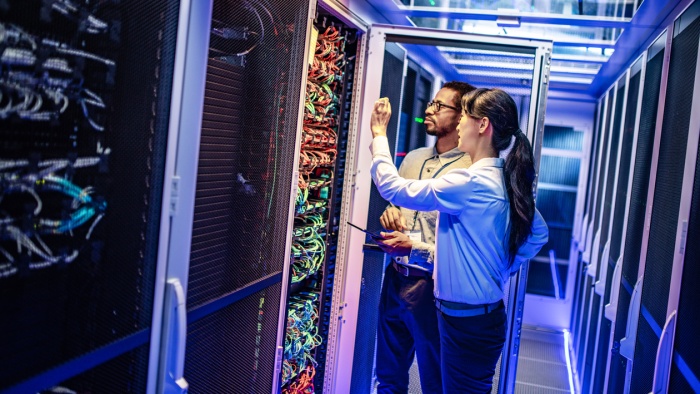
Data
ACCEL enables the rapid integration of real historical, simulated, and curated experimental data feeds for concept exploration and capability evaluation.
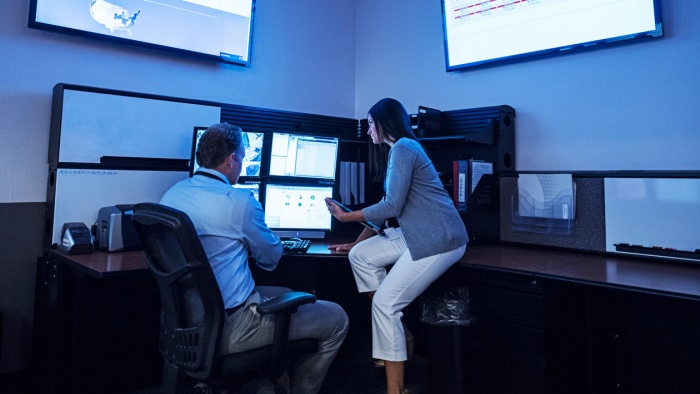
Interactive
ACCEL provides an “out-of-the-box” capability for human-in-the-loop (HITL) experimentation and Monte Carlo fast-time analyses.

Environment
ACCEL offers a persistent, distributed classified cloud environment complemented by a dedicated classified MITRE laboratory space in the Washington, D.C., area. Combined, the digital and physical infrastructure provides a secure digital proving ground with tools and software to support collaborative engineering analysis and experimentation and can reach operators and warfighters leveraging existing classified networks. Users can also leverage ACCEL’s controlled unclassified information (CUI)-compliant digital environment for interface testing and development prior to deployment at higher classification levels.
ACCEL provides a modular open systems approach featuring application programming interfaces (APIs) that enable government and industry entities to seamlessly integrate their own concepts via APIs into the ACCEL environment. This facilitates rapid deployment and testing of users’ technologies.
ACCEL maintains a comprehensive catalog of Advanced Framework for Simulation, Integration, and Modeling (AFSIM) operational scenarios, informed by intelligence, doctrinal guidelines, and relevant operational plans.
ACCEL enables the rapid integration of real historical, simulated, and curated experimental data feeds for concept exploration and capability evaluation.
ACCEL provides an “out-of-the-box” capability for human-in-the-loop (HITL) experimentation and Monte Carlo fast-time analyses.
ACCEL offers a persistent, distributed classified cloud environment complemented by a dedicated classified MITRE laboratory space in the Washington, D.C., area. Combined, the digital and physical infrastructure provides a secure digital proving ground with tools and software to support collaborative engineering analysis and experimentation and can reach operators and warfighters leveraging existing classified networks. Users can also leverage ACCEL’s controlled unclassified information (CUI)-compliant digital environment for interface testing and development prior to deployment at higher classification levels.
ADDITIONAL INFORMATION
Models and Example Use Cases
Our tested and validated operational models address challenges across classification levels to inform use cases such as:
- Strategic Decision Support
- Tactical Intelligence, Surveillance, and Reconnaissance (ISR)
- Tactical Fires
- Space Command-and-Control (C2)
- Command, Control, Computing, Communications, Cyber, Intelligence, Surveillance, Reconnaissance and Targeting (C5ISRT)
- Counter C5ISRT
- Mission Optimization
- Interagency Collaboration
- Gap Analysis
- Industry JADC2 Testbed
Microservices Available for Industry Prototypes
Customized microservices can be used to further inform scenario testing and validation. Example microservices currently available for industry prototyping include:
- Perceptions and fusion
- Courses of Action (COAs)
- Task Assignment
- Time Management
Collaboration Opportunities
MITRE can utilize the models and environment provided by ACCEL to engage with federally funded research and development centers (FFRDCs), the United States Government (USG), and Defense Industry Base partners. These collaborations can focus on concept exploration and assessment across multiple domains, addressing a variety of critical national security problems identified by the USG.
The ACCEL environment enables collaborative modeling, simulation, and analysis assessment, informing recommendations to the USG that prioritize effective solutions using existing and emerging industry capabilities to meet timelines driven by near peer threat analysis.